
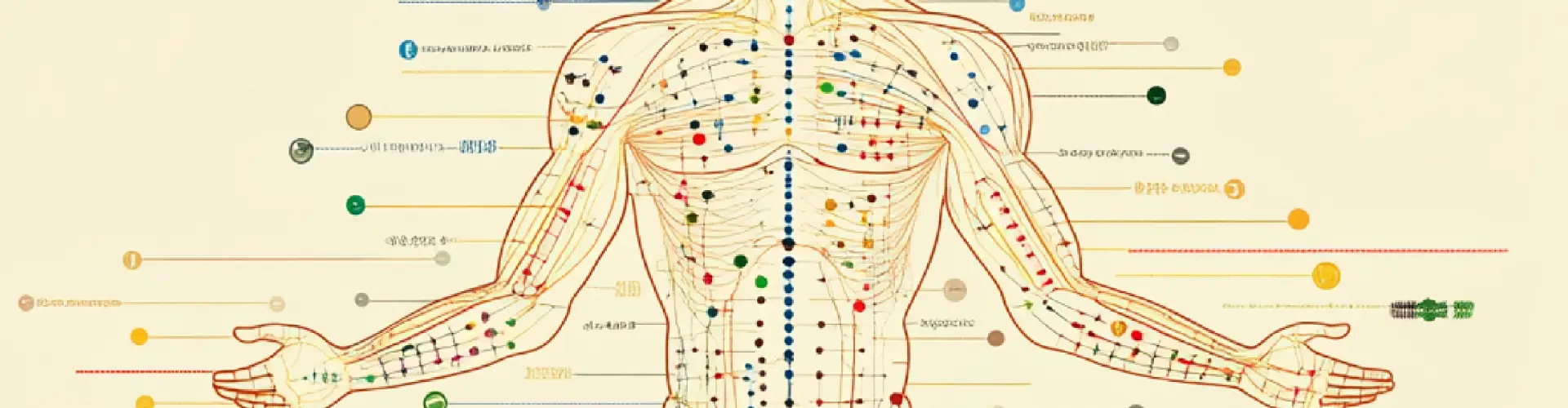
Rediscover your body's natural balance! Relieve pain, reduce stress and balance your vital energy with acupuncture.
Acupuncture: Balance and Renewal at the Cellular Level
Regenerative approaches in modern medicine do not only repair damaged tissue; they also re-establish proper communication between cells and activate the body’s own healing power. Acupuncture treatment is one of the most effective examples of this holistic, cellular-level approach to renewal.
What Is Acupuncture?
Acupuncture is a complementary medicine method in which very fine sterile needles are applied to specific “acupuncture points” on the body. Through these points, signals are sent that affect the nervous system, circulation and immune system.
- Cell communication is activated,
- Pain control mechanisms come into play,
- Balance within the tissue (homeostasis) is supported.
In this respect, acupuncture does not merely suppress symptoms; it also restores the body’s natural balance at the biochemical and neural level.
What Is Acupuncture Treatment?
Acupuncture treatment is applied to specific points by a specialist physician or a trained practitioner. It does not require living cell transplantation; instead, neural and circulatory signals that support the healing process are set in motion.
When used in addition to conventional treatments, this method is:
- Safer (the risk of drug side effects or surgical risk is minimal),
- Faster (the procedure time is short),
- Holistic in effect (it activates the body’s own healing system).
How Is Acupuncture Performed?
- Preparation: The patient’s condition is assessed and the acupuncture points to be used are determined. Sterile needles are selected and the patient is positioned comfortably.
- Application Methods:
- Needling / point stimulation: This is the most common method; fine needles are inserted into the determined acupuncture points.
- Electroacupuncture: Low-frequency electric current may be applied to the points.
- Ear or laser acupuncture: Alternative forms of application are also available.
- Session Duration: Each session generally lasts 20–40 minutes. After the procedure, patients can mostly return to daily life quickly.
Mechanism of Action of Acupuncture
The stimulation applied to acupuncture points is transmitted to the nervous system; this activates pain control, neural regulation and immune modulation mechanisms in the brain and spinal cord.
- Cellular Activation: Signals are sent to the nervous system and cells; repair processes begin.
- Balance at the Tissue and System Level: Harmony is re-established between the nervous, circulatory and immune systems.
- Reduction of Pain and Inflammation: The release of neurotransmitters such as endorphins and enkephalins increases; pain control is achieved.
In this way, the body re-enters a process of biological balance and cellular renewal.
When Is It Used?
1. For Pain and Musculoskeletal Problems
- Neck, lower back and back pain
- Joint problems, osteoarthritis (calcification of joints)
- Sports injuries, tendon and muscle problems
In these cases, acupuncture can improve mobility by regulating nervous and musculoskeletal balance.
2. For Neurological and Nervous System Disorders
- Headache, migraine
- Facial paralysis, nerve entrapments
- Sleep disorders, stress and anxiety
3. For Holistic Health and Support
- Chronic fatigue, weakened immunity
- Digestive system problems
- Support during the aging process
Benefits of Acupuncture
- It is minimally invasive — it does not require surgery and is performed with tiny needles.
- It may reduce medication use.
- It activates the body’s own healing mechanisms.
- It offers a holistic effect — on the pain, immune, nervous and circulatory systems.
- It allows quick recovery after the procedure and a return to daily life.
The Difference Between Acupuncture and Other Treatments
Unlike surgery, medication or physiotherapy methods alone, acupuncture provides signal stimulation at the cellular level:
- Surgery: Structural intervention
- Medication: Biochemical regulation
- Acupuncture: Balance at the level of neural and energy flow
In this way, the body’s own systems are actively engaged.
Treatment Process and Session Plan
- In pain-focused treatments: 1–2 sessions per week may be applied.
- In chronic or systemic conditions: A session plan lasting 2–4 weeks or longer may be required.
The effects generally begin to be felt after the first few sessions.
Who Can Receive It?
- People experiencing musculoskeletal pain
- People with nervous system disorders
- Those who want to support their holistic health
- Those who want to avoid surgery or medication
Frequently Asked Questions (FAQ)
- How safe is acupuncture? Because sterile needles are used, it is quite safe; the risk of side effects is low.
- Does acupuncture hurt? The needles are very thin; it is generally painless, and there may only be a slight prick sensation.
- When are the results felt? Some patients feel relief after the first session; the effects become more noticeable after a few sessions.
- Can it be combined with other treatments? Yes, it can be used together with physiotherapy, manual therapy, PRP or other complementary methods.
- Is the effect permanent? It depends on the patient and the condition; with regular treatment and lifestyle support, the effects become long-lasting.
Conclusion: Restore Balance at the Cellular Level
Acupuncture treatment reactivates communication between cells and thereby activates the body’s own repair process. It is an effective complementary medical method for pain, neurological problems, musculoskeletal conditions and general health support.
Without the need for surgery or heavy medication use, you can bring your body back into balance with a completely minimally invasive and holistic approach.
Frequently Asked Questions About Acupuncture
What is acupuncture and for which conditions is it effective?
Acupuncture is an ancient, well-established method based on traditional Chinese medicine. Fine acupuncture needles are inserted into specific points of the body to balance the flow of energy. It is very effective in pain management. It is used for chronic pain, neck, back and lower back pain, migraine-type headaches, soft tissue rheumatism such as fibromyalgia, breaking insulin resistance in metabolic syndrome, weight loss and weight control, and also in smoking cessation treatment.
How long do acupuncture sessions last and how many sessions are needed?
Acupuncture sessions last 15–20 minutes. The number of sessions required varies according to the condition being treated. Acute conditions heal more quickly, while 10–15 sessions are recommended for chronic conditions.
Do acupuncture needles hurt?
No. Very fine needles are inserted into the acupuncture points of the body, or into specific points on the ear in ear acupuncture.
Does acupuncture have side effects?
Not when performed correctly.
Does acupuncture treatment give permanent results?
It varies according to the person's healing capacity and the severity of the disease, but it can give permanent results, especially in conditions such as migraine and other chronic headaches.
Can acupuncture be safely applied during pregnancy?
It can be applied.
Does acupuncture relieve migraine and chronic headaches?
It is a very effective treatment.
Is it possible to quit smoking with acupuncture?
In my clinic, I obtain very successful results in smoking cessation treatment with ear-body acupuncture, Undulation and Biophoton treatments.
Can I return to daily life immediately after acupuncture?
You can return immediately.
Who cannot receive acupuncture treatment?
It cannot be applied to an area where there is a local infection. Apart from that, it can be applied to everyone, unless the person is experiencing a very urgent situation such as an acute psychotic episode or a heart attack, in which they cannot understand the acupuncture treatment.
Clinic Location
We offer this treatment at our clinic in Ataşehir / Istanbul. Address and directions.