Solve your pain at its root! Renew your tissues with Prolotherapy and PRP and reactivate your natural healing power.
Prolotherapy and PRP: Natural Healing with the Body’s Own Power
Today, in the treatment of muscle, joint and tendon pain, there is a growing shift away from merely suppressing pain temporarily and toward natural treatments that activate the body’s own repair mechanism. This is where Prolotherapy and PRP (Platelet Rich Plasma) treatments come in. Both methods belong to regenerative medicine, in other words “renewing medicine”; the aim is to enable the tissue to repair itself. They activate the body’s own healing potential with drug-free, surgery-free and natural methods.
What Is Prolotherapy?
Prolotherapy means “proliferation therapy”, that is, a treatment that stimulates tissue regeneration. In this method, a natural irritant such as dextrose (sugar) is generally injected around the damaged tendon, ligament or joint. The aim is to give this area a controlled micro-stimulus and start the body’s natural healing process. In other words, prolotherapy creates a small, controlled injury and directs the organism’s “repair team” to that area.
It creates a mild inflammation (repair response) at the injection site. During this process, the body increases growth factors and collagen production. As a result, weakened connective tissue and tendons are strengthened. This method is particularly effective for chronic muscle-tendon injuries, joint laxity and painful degenerative conditions.
When Is Prolotherapy Used?
Knee, shoulder, elbow and hip joint pain; muscle-tendon tears; pain caused by cervical and lumbar disc herniation; laxity in the joint ligaments (instability); tennis/golfer’s elbow; heel spur; Achilles tendinitis; sacroiliac joint pain; fibromyalgia and chronic muscle pain.
What Is PRP (Platelet Rich Plasma)?
PRP is platelet-rich plasma obtained by separating blood taken from the body through special processes. This plasma is extremely rich in healing growth factors. The aim of PRP treatment is to accelerate the natural repair process by injecting this concentrated plasma into the damaged area.
How Is PRP Treatment Performed?
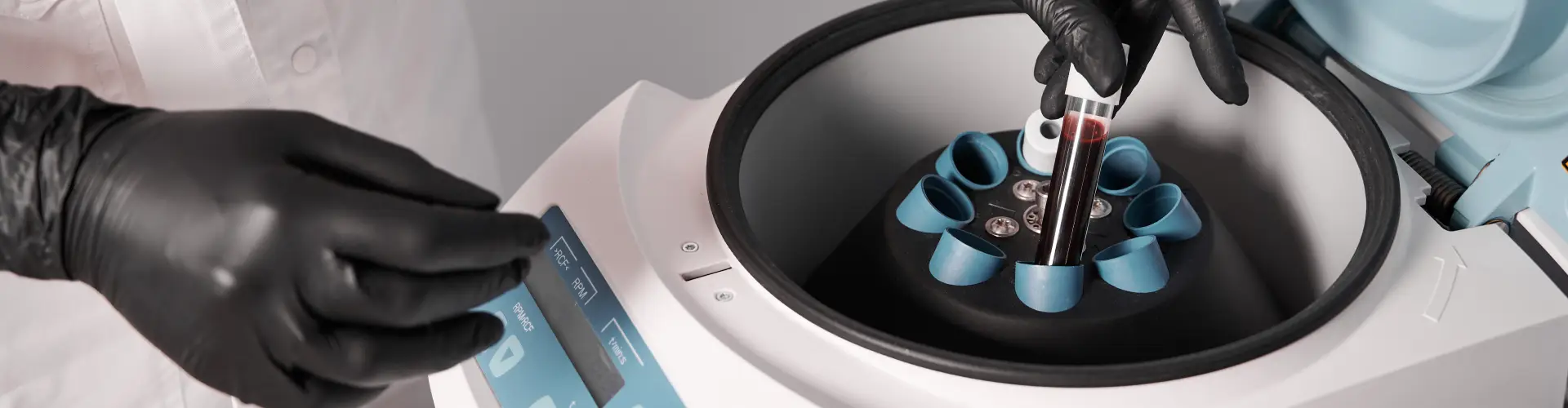
A small amount of blood is drawn from the patient and separated into its components by centrifuge in a special device, and the platelet-rich portion is injected into the target area. The procedure usually takes 20–30 minutes and requires no special preparation other than local anesthesia.
How PRP Works
Platelets carry the growth factors responsible for the body’s natural repair. When these substances are injected into the tissue, they stimulate new cell formation, accelerate tissue repair, increase collagen production and reduce pain. As a result, joint surfaces, muscles and tendon tissues become stronger, more elastic and more durable.
What Is the Difference Between Prolotherapy and PRP?
Prolotherapy starts the healing process by giving the body a natural stimulating substance from outside (usually dextrose). PRP, on the other hand, delivers the growth factors obtained from the body’s own blood directly to the damaged tissue. In short: Prolotherapy “stimulates”, PRP “nourishes and repairs”. In some cases, treatment success can be increased by applying the two methods together.
When Are Prolotherapy and PRP Preferred?
Because both methods increase the tissues’ capacity to repair themselves, they are preferred especially in cases of chronic pain and soft tissue damage. The method to be used is determined according to the origin of the problem.
- Prolotherapy: Stands out in connective tissue weakness, joint laxity or chronic pain; it is effective for strengthening the structures that support the joint.
- PRP: Preferred in cartilage damage, tendon injuries and conditions that require tissue regeneration; sports injuries, meniscus problems, Achilles tendinitis and pain due to cartilage loss.
- Combination: In cases with both ligament weakness and cartilage damage, stimulation can be applied first with Prolotherapy, followed by nourishing repair with PRP.
Summary: Prolotherapy is preferred for loose ligaments and unstable joints; PRP for worn muscles, tendons and cartilage; and the combination for chronic and multifaceted tissue damage.
Treatment Process and Session Plan
Prolotherapy is generally applied in 3–6 sessions (once every 2–3 weeks), while PRP is applied in 2–4 sessions (3–4 weeks apart). Within a few weeks of starting treatment, reduced pain, easier movement and increased tissue durability are observed.
What to Pay Attention to After the Treatment
- You may feel mild pain or a sense of fullness for the first 24–48 hours; this is part of the natural healing process.
- For the first few days, painkillers and ice application should be avoided (inflammation is therapeutic).
- Drink plenty of water, take light walks and follow the exercise program recommended by your physician.
Benefits of Prolotherapy and PRP
- Provides natural healing; may be an alternative to surgery.
- Has low side effects; strengthens connective tissue and tendons.
- Offers lasting relief in chronic pain and increased joint mobility.
- May help shorten the time to return to sport.
Frequently Asked Questions (FAQ)
- Are Prolotherapy and PRP painful? There is a mild prick sensation during the needle insertion; the procedure is generally easily tolerated.
- How many sessions are needed? 3–6 sessions are usually sufficient; the plan is determined according to the condition.
- How soon are the effects seen? The first results are felt within 2–3 weeks; full repair may take a few months.
- Are these treatments permanent? Because the tissue structure is repaired, the likelihood of the pain returning is low.
- How does PRP differ from Prolotherapy? PRP is obtained from your own blood; Prolotherapy uses an external stimulating substance.
- Can it be used in athletes? Yes; it is often preferred in sports injuries and muscle and tendon tears to accelerate healing.
Conclusion: Use Your Body’s Own Repair Power
Prolotherapy and PRP are powerful methods based on modern medicine’s principle of natural healing. Without the need for surgery, they restructure muscle, tendon and joint tissues using the body’s own resources. In this way, chronic pain decreases, joint mobility increases and quality of life improves.
Frequently Asked Questions About Prolotherapy-PRP
What is prolotherapy treatment and how does it work in the body?
Prolotherapy is a treatment given to reduce pain in the joints and connective tissue and to support healing. When injections are made into damaged tissues in the body, they trigger the body's own healing mechanism and strengthen the connective tissue.
Which joint, ligament or muscle conditions is prolotherapy effective for?
Connective tissue injuries, joint osteoarthritis (calcification), cervical and lumbar disc herniations, osteoarthritis, tendon injuries.
How many sessions are given and what is the interval between sessions?
Although it varies according to the patient's needs, treatment is given in 3–6 sessions, at intervals of 3–4 weeks.
Is pain felt during the procedure, and is anesthesia used?
Local anesthesia is used during the procedure, and applying cold before the procedure helps make prolotherapy comfortable.
Does prolotherapy treatment have any known side effects?
Mild pain, swelling and bruising may occur at the application site, but these are usually mild and temporary.
How long does it take to return to work or sports after treatment?
You can return to daily life after treatment. Return to sport should follow the doctor's recommendation.
What are the differences between prolotherapy and PRP treatment?
Prolotherapy is performed with a special solution that triggers the body's healing. PRP, on the other hand, is applied with platelet-rich plasma prepared by drawing blood from the person and centrifuging it. In both treatments, regeneration is achieved in the tissues when injections are made into the places where ligaments attach and into the joint.
Can prolotherapy be applied to everyone, and who is it not recommended for?
Although prolotherapy is generally safe for most people, it is not recommended in some cases. It is not recommended for people with bleeding disorders, in the case of infection, and for pregnant women.
How lasting are the treatment results?
Although it varies from person to person, once improvement is achieved within a few months, the effect of the treatment continues for many years.
Can other treatments be applied together with prolotherapy?
Yes. Physical therapy and exercise programs can be applied together with prolotherapy. Or, according to the patient's needs, PRP, prolotherapy and neural therapy can be applied by spreading them across sessions in a treatment protocol.
Clinic Location
We offer this treatment at our clinic in Ataşehir / Istanbul. Address and directions.